零碳矿山时代:铜矿绿色进化之路——博雷顿董事长陈方明在“国际铜业协会日”中国论坛的演讲
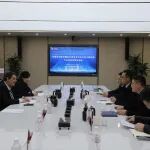
由国际铜业协会主办的“国际铜业协会日”中国论坛,于 11 月 25 日在上海浦东香格里拉大酒店举行,论坛以“绿色创新 铜绘未来”为主题,聚焦铜产业在能源转型、智能制造、绿色电力系统及全球供应链变革中的新趋势和新机遇。论坛吸引了来自全球34家会员单位、国内外铜产业链核心企业、行业专家及相关机构代表,共同探讨绿色铜业的未来路径。
(点击可观看完整演讲视频)
在本次论坛上,博雷顿董事长陈方明受邀发表主题演讲《零碳矿山时代:铜矿绿色进化之路》,围绕新能源在矿山端的应用、电动化装备的经济性突破、自动驾驶在金属矿的潜力与挑战等内容进行了深入分享,并结合全球多个落地项目,展示了“零碳矿山机器人”在全球矿山的实践与趋势。
The “International Copper Association Day” China Forum, hosted by the International Copper Association (ICA), was held on November 25 at the Pudong Shangri-La Hotel in Shanghai. With the theme “Green Innovation · Copper Shapes the Future,” the forum brought together global ICA member companies, leading enterprises across the copper value chain, industry experts, and representatives from research and regulatory institutions to discuss new trends and emerging opportunities in energy transition, intelligent manufacturing, green power systems, and the evolving global supply chain of the copper industry.
At the invitation of the organizers, Mr. Chen Fangming, Chairman of Breton, delivered a keynote speech during the event. His sharing focused on the role of renewable energy in mining operations, the economic breakthrough driven by equipment electrification, and the emerging potential of autonomous driving in metal mines. Drawing upon multiple projects already deployed around the world, he provided a practical perspective on how “zero-carbon mining robots” are shaping the future of global mining.
以下为陈方明董事长演讲的整理版,在尊重原始表达的基础上进行了必要的校正与呈现。
The following is an edited version of Chairman Chen’s speech, refined for clarity while remaining faithful to the original content.
各位领导、各位嘉宾,大家好!
今天我想说,其实电是人类进步的基石。为什么这么讲?因为去年全球用电量大概是 30 万亿度,而整个人类能源消耗大约是 100 万亿度。意味着全球电气化率只有 30%,还有 70% 的巨大空间。支撑这 70% 电气化增量的关键材料,就是铜。所以我今天想分享的是新能源、机器人以及自动驾驶对全球矿业——特别是铜矿——带来的影响。
博雷顿是一家创业公司,也是一家香港主板上市公司,我们今年成功在香港上市,被誉为“零碳矿山机器人第一股”。之所以这样说,是因为我们做的三件核心业务,都与矿山的零碳化直接相关。
第一,是在矿山端建设风光水储等新能源发电系统。目前我们在非洲为四个铜矿、金矿提供绿色电力,项目正在建设中,最快明年 1 月并网,最晚明年 5 月并网。第二是矿山设备的电动化。采铜、采煤需要大量装备,以前依赖柴油,现在都能用电来驱动。第三,是自动驾驶系统。我们把电动化与自动驾驶结合,在矿区形成了一个完整的闭环。
全球矿业正在加速能源转型。中国的新能源发展非常快,成本也在迅速下降。我 2008 年进入新能源行业,当时说光伏储能能应用到矿业,是天方夜谭;但今天它不仅变成现实,而且电价可以比化石能源低 80%。中国在西藏建设的大型光储项目已经不是传统的“跟网型”,而是“构网型”技术,这种技术难度更大,却能很好地解决偏远矿区的供电问题。
新能源在矿山的应用正在加速,成本也持续下降。电动化正进入一个新的时代,我称其为“场景时代”。前几天曾毓群在大会上说电动化进入“全域增量时代”,其实讲的就是拓展新场景,比如矿山,一旦把光储引入,成本会急剧下降。
以刚果(金)为例,它每年的铜产量大约 330 万吨,未来几年会持续扩产。全球每年新增的 100 万吨铜中,刚果可能贡献 30 万到 50 万吨。而铜冶炼非常耗电,一吨铜需要大约 3500 度电,因此刚果长期电力短缺。同时当地柴油价格非常高,我上次去的时候,柴油价格已经涨到 1.8 美元一升,而去年还是 1.3 美元。一升柴油发电只有 3 到 3.5 度,折算成电价是每度50 美分左右。而光伏+储能在非洲当地的实际成本通常是20—22 美分,能够节省 50% 以上的电力成本,需求非常迫切。今年华为和多家企业在非洲合作构网型储能,我们在非洲的四个项目里有两个也与华为合作。
从经济模型上看,如果在非洲建设 50 兆瓦光伏,加储能系统,当地有效发电小时大概是 1300 到 1500 小时,一年可发6500 万到 7500 万度电,电价能做到 20 美分左右。与柴油的 50 美分相比差距巨大。即使未来电力状况改善,光储依然具有长期经济性。采用 PPA 或自投模式,前五年成本略高,但仍然比柴油低很多;后五年、后十年电价还会下降。
我们在非洲与中国有色合作的项目就是一个典型案例。当地矿山完全依赖柴油发电,年发电量1.5 亿度,成本高达 7500 万美元。我们为其提供 76 兆瓦光伏和 100 兆瓦时储能,可提供 1.2 亿度绿电,把电价从 50 美分直接降到约 20 美分。每年节省电费 3600 万美元。从接触到并网只用了八个月,完全符合 ESG 要求。
类似项目我们也在与金川集团推进。新能源解决了电力缺口后,自然就需要电动装备的配套。电动化装备能为矿山节省 60%-70% 的能源成本。在中国,我们的电动矿卡一年行驶 5 万公里,每公里节省约 15 元,一年可节省 75 万元。在非洲,由于油价更高、电价也比中国贵,每公里可节省超过 20 元。挖掘机改电效果更明显,柴油一年成本 300 万到 400 万,而电力成本不到 100 万。纯从经济性看,未来五年全球矿山没有理由不实现电动化。
自动驾驶方面,目前中国已有接近 2000 台自动驾驶矿卡投入运营,但 95% 在煤矿。金属矿的难度更大,路窄、坡大、垂直高差大、场景复杂,因此尚未大规模推广。但随着大模型技术发展,自动驾驶在金属矿的应用会加速。我们正在推动端到端模型在金属矿场景落地,而不仅仅局限在煤矿。
我们最近发布了一款无驾驶室的纯电动矿卡,100 吨载重,整车总重可达 160 吨,完全正向开发。我们采用集成式传感器,而不是目前市面上一些方案上的二十多个外挂传感器,因为矿山工况恶劣,雨雾、粉尘、颠簸都会导致外挂传感器故障率更高。集成式传感器加上端到端大模型,才是矿山自动驾驶的发展方向。
目前我们的电动设备也已经进入非洲,今年在赞比亚交付了近 40 台,明年将在刚果大量落地。我相信未来两三年,在中亚、非洲、南美、澳大利亚都会出现大规模的电动化与无人化应用。未来五年,全球矿山将进入一个“没有理由不选择电动化与自动驾驶的阶段。
新能源在矿山有非常广阔的应用空间。博雷顿是一家创业公司,也是一家科技公司,我个人的背景也更多来自新能源和自动驾驶领域。希望今天的分享能给行业带来一些启发,欢迎大家会后交流,也可以加我的微信,线下沟通。谢谢大家!
Ladies and gentlemen, distinguished guests, good afternoon. Today, I would like to begin with a simple idea: electricity is the cornerstone of human progress. Why do I say this? Because last year, global electricity consumption was about 30 trillion kilowatt-hours, while total global energy consumption reached 100 trillion kilowatt-hours. This means the world’s electrification rate is only 30%, leaving 70% of energy still unelectrified. And the key material supporting this massive 70% electrification potential is copper.So today, I want to share how new energy, robotics, and autonomous driving are reshaping global mining—especially copper mining.
Breton is both a startup and a company listed on the Hong Kong Main Board. We successfully went public this year, and have been called the “world’s first zero-carbon mining robot stock.” The reason is that our three core businesses directly contribute to the construction of zero-carbon mines.
The first is renewable power for mines, including photovoltaic, wind, hydro and energy-storage systems. We are currently building green-power projects for four copper and gold mines in Africa. All are under construction, the earliest of which will be connected to the grid in January next year, and the latest in May.
The second is electrification of mining equipment. Mining—whether copper or coal—relies heavily on machinery that was traditionally powered by diesel. Today, all of these machines can be powered by electricity.
The third is autonomous driving. By combining electrification with autonomous driving, we are building a complete and closed-loop smart-energy system for mines.
Globally, mining is undergoing accelerated energy transition. China’s renewable-energy industry has grown extremely fast, and costs are falling rapidly. When I entered the renewable-energy sector in 2008, applying solar-plus-storage in mining was considered unimaginable. But today, not only has it become reality, its cost can be 80% lower than fossil-fuel power generation.
In regions like Tibet, China has already deployed large-scale PV+storage systems using grid-forming technology rather than traditional grid-following systems. Grid-forming systems are technically more demanding but solve the stability challenges of power-deficient, remote mining areas. Renewable energy in mining is accelerating, and the cost is continuing to fall. Electrification is entering a new phase—I call it the “scenario era.” As Dr. Robin Zeng recently said, electrification is entering an “all-domain expansion era,” which essentially means finding new application scenarios such as mining, where costs drop sharply once solar-plus-storage is implemented.
Take the Democratic Republic of the Congo (DRC) as an example. The country produces around 3.3 million tons of copper annually and will continue expanding production. Of the roughly 1 million tons of global copper production increment expected each year, the DRC may contribute 300,000–500,000 tons. Copper smelting is highly energy-intensive—each ton of copper requires about 3,500 kWh of electricity—which leads to persistent power shortages.
At the same time, local diesel prices are extremely high. During my last visit, diesel had already risen to $1.8 per liter—up from $1.3 last year. One liter of diesel only generates 3 to 3.5 kWh, which means diesel-based power costs around $0.50 per kWh. However, actual PV+storage power costs in Africa are $0.20–0.22 per kWh, saving more than 50%. Demand is both large and urgent.
This year, Huawei and several companies have jointly deployed grid-forming storage systems in Africa. Among Breton’s four African projects, two are in cooperation with Huawei.
From an economic perspective, a 50 MW PV + storage project in Africa typically generates 65–75 million kWh per year, at a cost of roughly $0.20/kWh, compared with $0.50/kWh for diesel. Even if the local power situation improves in the future, PV+storage will remain cost-competitive. Under PPA or self-investment models, electricity prices may be slightly higher in the first five years, but still far below diesel—and will be even lower in the following years.
One representative project is our cooperation with China Nonferrous Mining. The mine relied entirely on diesel power, with annual consumption of 150 million kWh and an annual electricity bill of $75 million. We provided 76 MW of photovoltaic and 100 MWh of storage, supplying 120 million kWh of clean electricity each year. This reduced the electricity price from $0.50 to about $0.20, saving $36 million annually.
The entire process—from first contact to commissioning—took only eight months, fully meeting ESG requirements. A similar project with Jinchuan Group is also progressing in the DRC. With renewable power in place, the next natural step is electrified equipment.
Electrification reduces energy costs by 60%–70%. In China, our electric mining trucks can save about 15 yuan per kilometer, totaling 750,000 yuan per year for a truck running 50,000 kilometers annually. In Africa, savings exceed 20 yuan per kilometer because local oil prices are much higher. Electrifying excavators is even more economical: diesel costs 3–4 million yuan per year, while electricity costs less than 1 million. From a pure economic standpoint, mines worldwide have no reason not to electrify in the next five years.
On autonomous driving, China currently has nearly 2,000 autonomous mining trucks in operation, but 95% are in coal mines. Metal mines are more challenging—narrower roads, steeper slopes, larger elevation changes, and more complex working conditions—so large-scale deployment has not yet happened. But with rapid advances in large-model AI, autonomous driving in metal mines will accelerate. We are promoting end-to-end AI models specifically for metal-mining scenarios, not only coal mines.
Recently, we released a cab-less pure-electric mining truck with a payload of 100 tons and a gross vehicle weight of 160 tons, developed entirely from a clean-sheet design. We use fully integrated sensor modules rather than the 20-plus externally mounted sensors common in some current solutions. Because mining environments are harsh—rain, fog, dust, vibration—external sensors have much higher failure rates. Integrated sensors combined with end-to-end AI models represent the future of autonomous mining.
Our electric vehicles have already been deployed overseas. This year, nearly 40 units were delivered to Zambia, and many more will be delivered to the DRC next year. I believe that within the next two to three years, large-scale electrification and autonomous-driving deployments will appear across Central Asia, Africa, South America, and Australia. Over the next five years, mining companies worldwide will have no economic reason not to adopt electrification and autonomous systems.
Renewable energy has enormous potential in mining. Breton is a startup, but also a technology company, and my own background is deeply rooted in renewable energy and autonomous driving. I hope today’s sharing provides some inspiration for the industry. I welcome further discussions—please feel free to connect with me on WeChat.
Thank you all.
喜欢此内容的人还喜欢
追光对话 | 博雷顿董事长陈方明接受Bauma China宝马展官方采访 ,发布重磅战略规划
博雷顿新能源
博雷顿新能源
博雷顿新能源
博雷顿新能源
声明:本文系转载自互联网,请读者仅作参考,并自行核实相关内容。若对该稿件内容有任何疑问或质疑,请立即与铁甲网联系,本网将迅速给您回应并做处理,再次感谢您的阅读与关注。
不想错过新鲜资讯?
微信"扫一扫"